Emergency operation
| WATCHPOINT: This protection against the fuel pump running if
there is no oil pressure (aka the engine is not running) It was used on
the stock Rover V8s from 1976 to 1986 (the transition year all Plus 8s
became EFI). I am not sure of the engine block numbers for the
start or the finish. The watchpoint, aside from the dates here
above, is that they became redundant and unwired with the EFI models
for two reasons; A. The EFI some models from 1984 to 1986 and then all models until 1990 have a different "safety" feature contained within their AFMs that stops the pump if it senses the engine is not running (no airflow).The oil pressure became unnecessary. BTW, this AFM thing inevitably fails and the car won't start. (Very hard to diagnose unless you have seen it dozens of times.) B. The Oil Pressure Isolator switch is even worse. They fail often. SOLUTION: I recommend to all owners in this carburetor/EFI era (1976 to 1990) to learn from Rover/LR and install a regular inertia switch. Ideally you want your car's fuel to stop running after an impact. An inertia switch is cheap and easy to fit. |
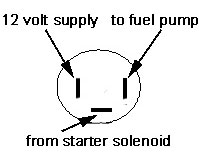
This oil switch is located on top of the oil filter housing, it has 3 connections and the original fitment connects the wiring with a molded plastic socket. The primary function of the switch is isolate the fuel pump if the oil pressure drops to zero and the ignition is still on, for example, after an accident which stalls the engine.
To assist in starting the car when cold the fuel pump is connected while the starter is cranking.
Wiring connections
White 12v supply (ignition on )
White/purple to fuel pump
White/brown from starter solenoid
If the wires are a different colour then disconnect them from the switch and with the ignition on and engine off check with a voltmeter to find the 12 v supply, shorting this wire to the other two in turn will cause the fuel pump to run and the starter solenoid to kick in.
Switch connections
The 3 prongs are in a “U” shape.
Emergency operation
If the switch fails the fuel pump will not operate, in this case the 12v supply can be directly connected to the fuel pump wire. No damage will be caused by doing this.
| WATCHPOINTS : The pre-GEMS oil pump is an engine weak point as were those fit to the Buick 215. The ones from the pre-Sd1 era are the worst but they are all iffy until GEMS blocks in 1996..which have replacement issues.. They produce relatively feeble oil pressure from the start for which there a number of cures, some of which I list in the oil pump section here. They should be maintained carefully as they wear which can be fixed.
As they wear....the already low oil pressure keeps dropping which
triggers the oil presssure isolator switch. This will happen when the
car is use and heated the engine oil and lowered its viscosity.
Additionally: 1. The fuse for the isolator can blow as the connections become affected by road debris 2. As the internals of the pump wear, its drive gear can break causing damage to the pump and the timing cover. 3. The oil pressure islolater fuel pump earth connection is faulty IMHO, the logic of an oil isolator is questionable at best. It is an suspect way to protect this engine with its ow oil pressure. Ideally you want the car to stop when the engine is not running (no oil pressure) but it is vastly preferable to stop the pump instantly after an IMPACT and protect YOU and the engine. That is why these devices, EI or carb'd car, were all replaced by inertia switches after 1990. |
By-pass switch
If the car is fitted with a Weber 500 or a Holley carb and a very open air filter such as a K & N when it is not used for some days the fuel in the carb evaporates and the pump has to run for several minutes to refill it. Ditto for an EFI vehciles that has not been used for a long time.
ITo attach the wires to the switch just cut off the connectors
for the 12 volt supply and the pump wires and crimp and / or solder new
connectors on with both the original wire and one of the switch wires in
each one. The solenoid wire is now redundant and can be left unconnected
and safely taped back onto the other wires.